



Blog
Why Wheel Alignment Matters More Than Most Drivers Think

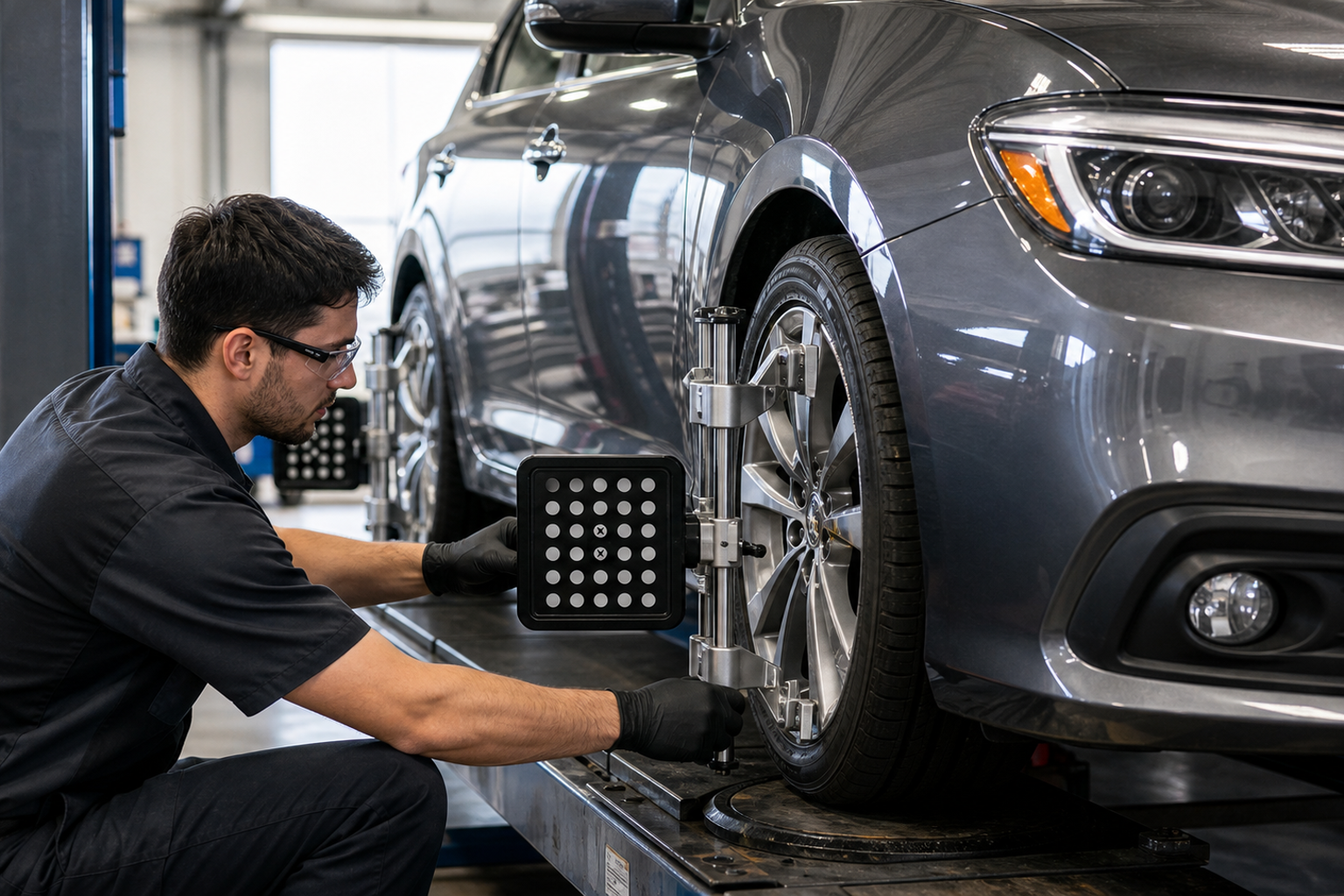
Wheel alignment is one of those services many drivers postpone because the car is still moving, the engine sounds fine, and nothing seems urgent. The problem is that alignment issues often build slowly, which makes them easy to ignore while they quietly reduce tyre life, affect handling, and increase the overall cost of ownership. If your vehicle drifts on a straight road, the steering wheel sits off-centre, or the tyres are wearing unevenly, alignment may already be affecting more than just comfort.
At its core, wheel alignment is about making sure the wheels point in the correct direction according to the vehicle manufacturer’s specifications. Small differences in toe, camber, and caster can change the way the tyres contact the road. When those angles move out of range, even by a little, the tyres start scrubbing instead of rolling as efficiently as they should. That means more resistance, more heat, and faster wear across one edge or across the tread in a pattern that shortens tyre life dramatically.
One of the first clues is steering behaviour. If you need to keep correcting the steering wheel to stay straight, or if the car gently pulls to one side, alignment is worth checking. Some drivers assume the road crown is the cause every time, but when the same pulling happens on multiple roads, the vehicle is usually telling you something. A car that tracks properly feels settled and predictable. A car with alignment issues can feel like it always needs a small input from the driver.
Tyre wear is another major reason to take alignment seriously. Tyres are expensive, and uneven wear can ruin a set long before the tread is used evenly. Inner-edge wear, outer-edge wear, and feathering patterns often point toward alignment settings that are no longer correct. Rotating tyres helps distribute wear, but rotation cannot solve a geometry problem. If alignment is off, new tyres can start wearing incorrectly almost immediately, which turns a simple maintenance step into a repeat expense.
Alignment can also affect fuel efficiency in a subtle but real way. When tyres are not rolling in the intended direction, the engine has to work a little harder to move the car forward. That difference may not feel dramatic in a single trip, but over weeks and months it adds up. More importantly, the extra rolling resistance often comes with less precise steering, especially at higher speeds or during lane changes, where small corrections should feel smooth rather than unsettled.
Many alignment problems begin after everyday events that do not feel dramatic at the time. Hitting a pothole, clipping a kerb, driving over rough surfaces, or replacing steering and suspension parts can all shift alignment enough to matter. Even normal component wear can gradually change angles. That is why alignment is not only a “something feels wrong” service. It is also a smart follow-up after suspension work, impact events, or tyre replacement.
There is also a safety and confidence angle that drivers notice right away once alignment is corrected. A properly aligned vehicle generally feels easier to place in a lane, calmer on the motorway, and more stable during braking and cornering. That does not just make the drive more comfortable. It reduces fatigue and helps the driver respond more naturally in traffic. If the car always feels a little vague or unsettled, many people are surprised by how much better it feels after a proper alignment check and adjustment.
Suspension and tyre condition still matter, of course. Alignment does not fix worn ball joints, weak bushes, damaged tyres, or poor tyre pressure. A good garage will usually inspect those items alongside alignment because they influence the final result. If a worn suspension part is allowed to remain loose, the alignment can drift again quickly. That is why a proper alignment service is most valuable when it is treated as part of a full steering and suspension health check rather than an isolated number on a screen.
Drivers often ask how frequently alignment should be checked. There is no single universal interval because road conditions, mileage, tyre quality, and driving habits vary widely. A practical approach is to check alignment whenever you replace tyres, notice uneven wear, feel pulling, or complete suspension-related repairs. If the car takes a hard impact from a pothole or kerb, it is also worth inspecting, even if the steering wheel still feels “close enough.”
Another benefit of timely alignment service is protecting newer vehicle technology. Modern steering and driver-assistance systems rely on a vehicle that behaves consistently. If the car is already drifting or tracking poorly, the driver may be making constant micro-corrections without realizing it. Correcting the alignment helps restore the natural, stable feel the vehicle was designed to have, which supports both comfort and confidence on longer journeys.
Alignment service is especially valuable after investing in a fresh set of tyres. New tyres should wear evenly from the beginning, and an alignment check gives them the best chance of doing exactly that. Spending money on tyres only to have them scrub away on the inside edge a few months later is frustrating and completely avoidable. A quick alignment inspection at the right time protects that investment and keeps the vehicle driving the way it should.
Ignoring alignment can create a chain of avoidable costs. Tyres wear faster, handling becomes less precise, fuel economy may decline, and new components can be stressed unnecessarily. By contrast, an alignment service is usually straightforward and much less expensive than replacing tyres early. It is one of the clearest examples of preventive maintenance paying off before the driver ever experiences a breakdown.
For drivers who want their vehicle to feel stable, protect their tyres, and drive as the manufacturer intended, alignment should not be an afterthought. It is a small service with an outsized effect on steering confidence, tyre life, and overall road manners. If your car is drifting, the wheel is off-centre, or your tyres are wearing unevenly, a professional alignment inspection is one of the smartest maintenance steps you can take.